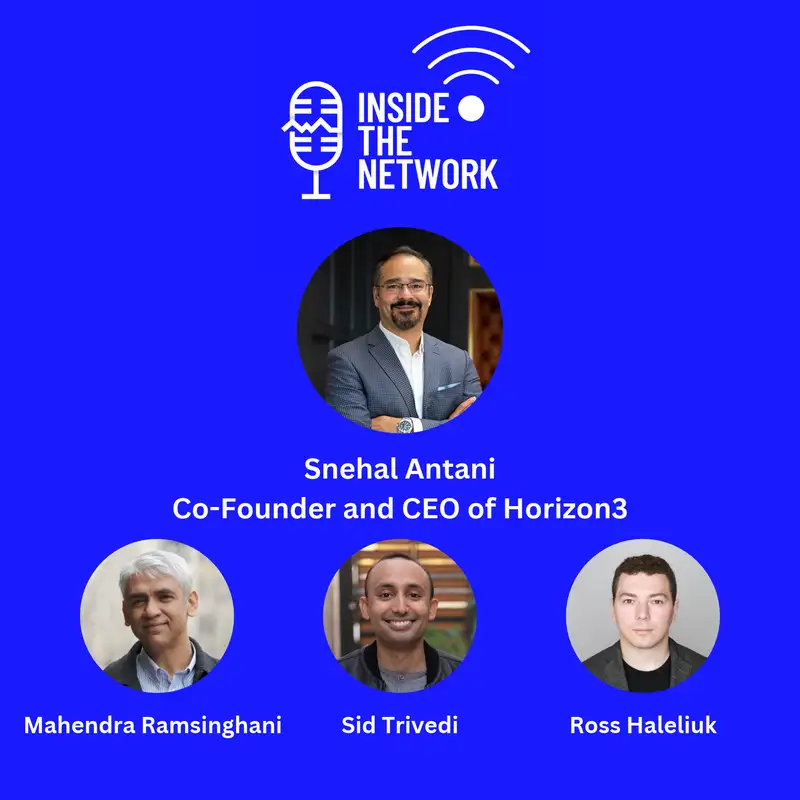
Snehal Antani: Building Horizon3 and preparing for the AI-versus-AI cybersecurity era
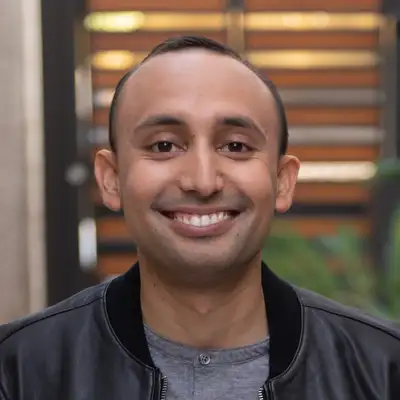
Download MP3Welcome to Inside the Network. I'm Sid Trivedi.
Ross Haleliuk:I am Ross Haleliuk.
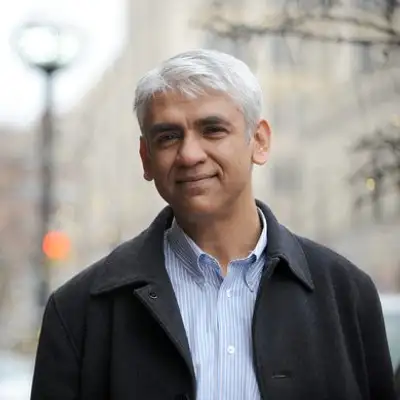
Mahendra Ramsinghani:And I am Mahendra Ramsinghani. We have spent decades building, investing, and researching cybersecurity companies.
Sid Trivedi:On this podcast, we invite you to join us Inside the Network, where we bring the best founders, operators, and investors building the future of cyber.
Ross Haleliuk:We will talk about the hard parts of the founder journey, launching companies, getting to product market fit, raising capital, and scaling to an exit.
Mahendra Ramsinghani:And, yes, we will also be talking about epic failures.
Sid Trivedi:But, Mahendra, we're here to make the founder journey easier.
Mahendra Ramsinghani:That is correct, Sid. But we cannot make it too much easier because startups are hard, And, of course, you already knew that.
Ross Haleliuk:Alright, you two. Enough. Let's get started with this week's episode.
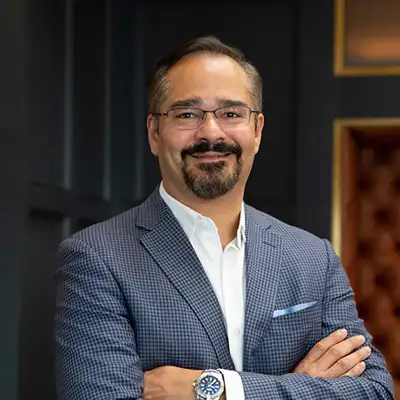
Mahendra Ramsinghani:What does it actually take to build a cybersecurity unicorn, raise a $250,000,000, and operate your core technology inside some of the most sensitive networks in the world? Our guest today is Antani, founder and CEO of Horizon three. Our conversation today is not just about Horizon three, its valuation, and some of the vanity metrics as such. It is about a founder who has learned and earned his right in building this company. Horizon three went from 25 to 125 employees very rapidly, and Snehal describes the challenges they learned when you scale faster than your culture.
Mahendra Ramsinghani:He describes the evolution from hiring pirates to building a navy. On one side, the pirates do everything. On the other side, the navy has a command and control and a coordinated force. Snehal has a very simple view of what makes a great team. It's people who are learn it alls, not just do it alls, but learn it alls.
Mahendra Ramsinghani:And then, of course, the technology. Horizon three has built an autonomous red team and a blue team system that can operate inside production environments. Snehal argues, and some of us might agree, that the future of cybersecurity is not just AI versus humans. It is AI versus AI operating at machine speed. This is Snehal Antani.
Mahendra Ramsinghani:Welcome to Inside the Network.
Sid Trivedi:Snehal, welcome to Inside the Network.
Snehal Antani:Excited to be here, Sid.
Sid Trivedi:We are going to talk about several different topics, and we'll absolutely get to Horizon three and all that you've done recently. But before we get there, let me, you know, talk a little bit about, you know, how your father was an electrical engineer who would hand you broken devices and just say, figure it out. What's the first thing you actually remember fixing? And did that feel like discipline at the time, or did it feel like play?
Snehal Antani:It was it was really interesting. So my dad, when I was young, I was six years old or so when he started doing this, he would go on business trips in in the mid eighties, and he would come back with toys. You know? As a little kid, you're super excited, and what what gifts did dad bring back on the trip? And by way, now I just bring back candy for my kids, which is a whole another thing.
Snehal Antani:But for my dad, he brought back toys. And I remember probably the the first time he really did that was a Toby robot. And back in the eighties, it's like these robots that were about a, you know, a foot tall, and you press this button. It would walk around and lift up this, like, smoke gun and so on. And so I turned it on and excited, and it wouldn't work.
Snehal Antani:My dad's like, I don't know what's wrong. Here's a multimeter, a soldering iron, and a screwdriver. Let's go figure it out. And he taught me to... Alright.
Snehal Antani:Step one. Let's just see if there's batteries in there. And then look. There's there's batteries. Alright.
Snehal Antani:Well, let's go make sure the batteries are charged. Use the multimeter and show me how to do that. Batteries are charged. They're in the right way. Still not working.
Snehal Antani:Okay. Let's open up the back. And he methodically kinda taught me to... Alright. Here's how you take off the back.
Snehal Antani:Now let's use a multimeter. Let's figure out is some... Is current getting from here to here? Yep. Okay.
Snehal Antani:It must be on this side of the board. He kinda methodically walked me through how to troubleshoot and debug this problem. And I... Sure enough, I saw this resistor that he had cut, and then he taught me to solder that resistor back. And I'd left the button...
Snehal Antani:The on switch on. As soon as I soldered it back, the whole thing's lit up and started talking. And I was super excited, I dropped the soldering iron because I was so thrilled that we figured out, and I burned a hole in the carpet. And that was the first of many experiences where my my dad kinda... It was just more of, like, his love for electronics, and it's just something that that I really got into as a result.
Sid Trivedi:Was that a big factor behind, you know, why you went into software? Was it the early experience in in, you know, IT and electronics?
Snehal Antani:I think so. I think that we got a a computer when I was super young. We got Internet when I was young. And my dad was really big on self teaching, like, even himself. So my dad would learn to program in the late eighties and, like, well, I wanna I wanna do this too.
Snehal Antani:And I started figuring out, so I took his basic book when he was away at work, and I tried to figure this stuff out too. And I found a way that you turn it into a calculator and help me figure out my math homework. You know, let x equal 10. Let y equal 20. Let z equal x plus y, print z, or whatever it might be.
Snehal Antani:And so I think that just being around the tech and then watching my dad be this learn it all that was always trying to learn about the next thing instilled this sense of curiosity and, honestly, this sense of systems thinking and this this love for tech from a very early age. And it was... There was always something. There was a new programming book he'd pick up or new Internet service or whatever else there might be. And so I think it was just this sense of of excitement and curiosity that really got me going.
Ross Haleliuk:You went from a software engineer at IBM to CIO roles at GE Capital and then a CTO at Splunk. Was Splunk what ended up driving you into cybersecurity?
Snehal Antani:I'd always been into it, man. Like, I was... So back when I was a kid, so late eighties, early nineties, you start... This is really bef... I mean, America Online had only just come out, but even before that, it was bulletin board services. And so I got into, kinda hacker tools and the anarchist cookbook and all the other things that were out there in these various, bulletin board services. I got into to hacking.
Snehal Antani:Then at the time, you'd watch different movies that had come out between sneakers and so on. And so I'd built this... Just this excitement and interest in cyber and hacking. Whenever my dad would ground me for doing something silly and he'd take my Internet access away, I had already cultivated a whole list of user IDs and passwords from AOL running phishing tools against the chat rooms. And so I had all sorts of backup user IDs and passwords to make sure I could always get online.
Snehal Antani:And so I've been into this world of cyber since I was a kid. And so I'd always had this dream. I think all of us did as kids back then, like, man, imagine being able to point, click, shoot, and hack, you know, whatever I wanted to go off and look at. And so I'd always had this idea. I'd always had this kind of dream, but I'd taken a step away from cyber, I'd kind of focused on other things.
Snehal Antani:So my dad made clear to me that if I stayed down that path, I'd probably get myself in trouble when I was a kid. And so the answer is Splunk helped to reinvigorate my excitement for cyber. I dealt a lot of cyber issues at IBM. I dealt a lot of it at at GE as well as a CIO, so I had cyber responsibilities. But I think Splunk really opened my eyes to the diverse capabilities of cyber across all of Splunk's install base.
Snehal Antani:And then when I joined JSOC, I got to to deal with cyber in a variety of different dimensions, and that's when I just really saw the opportunity to change the way people do things, which compelled me to start the company.
Ross Haleliuk:Let's talk more about JSOC. So as as you mentioned, you joined JSOC. And, when you did, you became a first ever CTO of JSOC. Most executives stick to the enterprise, and you ended up moving into special operations. Share with our listeners a bit what JSOC is, and what was the motivation behind this move?
Snehal Antani:Yeah. So I... Remember, my military background is watching Jack Ryan in Tropic Thunder. Like, I'm not a shooter. I didn't come from that world.
Snehal Antani:I didn't come from a family that had served. And and just in general, at least in The United States, I wouldn't say not only weirdly, but sadly, you know, if... The burden of military is is only experienced by, I think, less than 10% of the population. So if you served, it's most likely that your parents also served or... And your children will likely serve.
Snehal Antani:And so if you didn't come from that world, it's completely foreign to you. And for a variety of reasons, I had this desire to work on problems that mattered. We can talk about that after if you want. But... And because of kind of my background, my relationships, and the reputation, and my time at Splunk, DOD, there are a number of DOD agencies that were customers, I got introduced to the special operations community.
Snehal Antani:And so when they were looking to bring on a first ever CTO, they'd reached out, and I went out there to to kinda share my point of view of what it could look like and and how they should be thinking about technology and so on. And one thing led to another, ninety days later, I was at Fort Bragg as the first ever CTO. And I'll tell you, man, it was the hardest, most meaningful work of my career, and I grew more personally and professionally in special operations as that CTO than anything else I'd ever done. And you learn a lot about leadership. You learn a lot about grit, about service, and you get to learn alongside some of the greatest leaders the world will never know about.
Snehal Antani:And as long as you walk in with the mindset that what you read in books and movies is nothing like the real deal, and you have to earn the right to be on the team every single day. And if you walk in with that mindset, I think you have a higher likelihood of succeeding in that community because you are a tourist, and you just got to accept that you're a tourist in that world. And it's... I think it's it's something that I reflect on. And my wife asked, what are you gonna do when Horizon three exits and you're back on the street again?
Snehal Antani:I'm like, I'm going back to JSOC first chance I get. I'll probably fly private going forward, but it was just an amazing experience being there.
Mahendra Ramsinghani:So, Snehal, you know, it's clear that you're absolutely in love of the problem and not just love of this thing called entrepreneurship or startups. You know, one of our guests talks about the importance of falling in love with the problem. And you're clearly in that category where, you know, after Horizon three exists, you wanna go back to JSOC. Now what is it about JSOC that the corporate America does not fully appreciate, understand? And what are some things that you learned?
Mahendra Ramsinghani:I mean, you touched on some of those things, but can you expand on some of the things that corporate America doesn't fully understand?
Snehal Antani:Yeah. I'll tell you a couple of things. So one, when I joined, it was very contrarian. So I joined in the... In early twenty eighteen.
Snehal Antani:And early twenty eighteen was the height of the Google versus Department of Defense project Maven, you know, AI warfare, kind of news set of issues. And it was very contrary. And I'll tell you, I would, show up to an event, in the Peninsula somewhere with my Splunk badge, and lots of people wanted to talk to me. I remember showing up to the same events a few months later with my department of defense badge, and nobody wanted to talk to me. And so not only are you taking a 99% pay cut to leave as a corporate officer of a publicly traded company to go join the government and not as, like, some big political position.
Snehal Antani:I mean, when I first joined, I I didn't even change my LinkedIn. It's one of those, like... It's like Bruno. You don't you don't talk about it. If you have kids, you'll get the Disney reference.
Snehal Antani:So what I'll say is this very contrarian, and what excites me about joining JSOC is more so the problem, man. It's... You're working on problems that matter. When I was the CIO at GE Capital, you're basically using money to make money. Like, honestly, who cares?
Snehal Antani:It's it's not a problem that actually means anything. It's not a problem of consequence. You're not affecting people's lives in any meaningful way. Same thing at Splunk. Like, it was an amazing experience.
Snehal Antani:I learned so much from Godfrey, from Doug, from Conti, from all these amazing leaders I got to work alongside. But at the end of the day, nothing I did actually mattered. And if I look back at the things I got to be a part of in that special operations community, small role in in pretty incredible historical event. And just to say that I had a a small contribution and I helped make a difference, it means something. It just gives you a greater sense of purpose.
Snehal Antani:And I hope that other leaders take a break from industry to work on problems that truly matter. It doesn't have to be special operations or or the military or anything like that, but just go off and work on a problem that truly matters to rediscover why you do this stuff to begin with. And if you're doing it just for money or for ego, you're gonna be full of disappointment in life. But if you do it because you wanna make a difference and it's for something that you care deeply about, there's nothing more fulfilling.
Sid Trivedi:Talking about working on problems that really matter, let's get into building horizon three. And I remember this clearly. I remember meeting you, Snehal, but this was 2019. You leave your full time CTO of JSOC role to go and start this new company. And, you know, you have no product built out.
Sid Trivedi:And despite your very big, you know, well known profile in in in The Valley, you choose to work with a cofounder, Tony Palettiere, who is not from The Valley, who does not come from, you know, a traditional software enterprise software background. He comes from JSOC. What was the trigger behind this decision to work with Tony? And you had a few other early engineers as well, so you should talk about them too. And does that military relationship that that you had built with several of these folks, does that give you something deeper that a traditional cofounder relationship in the Valley does not give?
Snehal Antani:Yeah. I think there's a couple parts here. One, you guys know this in your podcasts. When you start a company, the idea doesn't really matter. It's the team that matters.
Snehal Antani:And that early team needs to be able to work with each other under a ton of pressure and stress. They have to care deeply about the problem that they're working on, and they've gotta be coachable and learn it all enough to be able to jump on whatever problem is in front of them. Because what what you do today is gonna be completely different than what you do tomorrow because it depends on the fire at the moment in the early days. And when you think about what makes people in special operations special, it's not that they can run far, shoot well, or swim fast. It's that they're learn it alls that can solve any problem as a team under pressure.
Snehal Antani:And so when you look at at that early group... So Tony had rotated in to be my deputy CTO as part of his role. And so I got to really learn about him, his passion, his excitement, his expertise, what drives him, the way he operates under pressure. We got to build that rapport working like pretty important problems where you didn't have a lot of margin of error. You look at some of the other guys, Kanan and Travis, both of these guys were military, and they were in the same special operations troop as Tony was, the joint communications unit or JCU.
Snehal Antani:And as was Zach Hanley, as was Eric Fredrickson. So of the first seven or so people, I think five or four of them, four out of seven were all in the same special operations troop together. And so they had built a tremendous amount of trust, and they had deep technical expertise, and they mastered their domains. And you take the... You know, I call those, like, the former special operations guys.
Snehal Antani:And then you had nerds in skinny jeans. You had Naveen. You had Albert. These other guys that spent all their years building enterprise software and doing software architecture and data architecture and so on at scale. And so we wanted to blend where is this...
Snehal Antani:Build on this foundation of being a learn it all that could solve any problem as a team under pressure with specialized expertise that complemented each other out. And I'll end with, I remember this one moment early and we're at a WeWork working out of a space, and Kanan, was a JCU special operator communications... Or network engineering expert, he was in awe of how quickly Navin, who was a double degree MIT, twenty years in industry writing code, how quickly Navin was cranking out software. And then Navin wanted to test something to attack, and so Kanan stood up this cyber range incredibly quick, and Naveen was in absolute awe of how quickly Kanan was able to stand up a pretty complex network architecture or network system. And that's where you realize, like, each of these skills, even though they came from completely different worlds, the skills and backgrounds were complementary, and they were just natural learn it alls.
Snehal Antani:And so I think that's what matters in that early phase of the team.
Ross Haleliuk:Snehal, SignalFire led your seed round back in January 2020 and kept showing up through the series d of five years running. What did they see in two j sock guys without any product at the time? What was the fundraising like to you, especially in those early days?
Snehal Antani:Yeah. I'll tell you. And and, actually, I mean, remembered part of this too. I'd never fundraised before. And so, man, was I terrible at those first pitches.
Snehal Antani:And I must have done a 100, 150 pitches. I mean, I talked to everybody, and I sucked for the first part of it. But you go into it knowing you're not gonna be very good, and you pay more attention to the the challenge questions that are being asked, the critiques, the challenges, and and and whatever else, and you keep iterating. You keep getting better and keep getting better. Now at the end of all of this, I end up with multiple term sheets.
Snehal Antani:But of of... Especially at the end of my fundraise for the seed round, I got pretty good at giving the pitch. I was pretty dialed in on the challenge questions and so on. And at the end of my presentation, there was an FAQ slide, like slide 23 or 24. And everyone tells you don't send your pitches ahead of time.
Snehal Antani:I disagreed. And my my point of view was, if you're not gonna take the time to read a preread, how are you gonna take the time to actually understand my business and give me advice? So I actually found sending my pitch deck ahead of time to be a good filter. And buried on slide 22 or 23 was an FAQ. And in the middle of one of the FAQ questions was something that was completely nonsensical.
Snehal Antani:It's kinda like my green m and m if you ever hear those stories. And I get on the call SignalFire. And before I start the first pitch, Walter, who's at SignalFire at the time, says, hey, Snehal. Before you jump in, I went through the preread. Slide 23, question three, middle of the paragraph.
Snehal Antani:You said this statement. Didn't make any sense to me. Could you explain it? And I walked through like, Walter, that was my green m and m. Thanks for doing the pre read.
Snehal Antani:Let me walk you through what what I was trying to say. And what that proved to me was, man, those guys were prepared. Like, Ilya was prepared. Walter was prepared. The other guys were prepared.
Snehal Antani:They understood their space. They took the time to do their homework. They asked incredibly thoughtful questions. And I'm really glad it worked out because they maintained that level of interest and intrigue and detail of the business even to this day. And so I've always found you you can understand a person's preparedness by the quality of questions that they ask, and there was no doubt that SignalFireable is by far the most prepared, and they've had a huge impact on the company over the last six years.
Sid Trivedi:Just on that topic, I mean, just help our listeners recognize what it was like having SignalFire early and then having them back you again at the a and the b and the experience behind that. Because, you know, I obviously remember this this whole thing, but just give some perspective having Elia and Walter kind of continue to to back the company over multiple rounds and leading those rounds, not just, you know, doing their pro rata check, but actually leading those rounds.
Snehal Antani:Yeah. It was great. And, actually, I like the the firm's philosophy overall is you double down. It's momentum investing. Right?
Snehal Antani:You double down on the hot companies. So we we ran first payroll January 2020. And I said, alright. Right before COVID. I said, look.
Snehal Antani:I think it's gonna take us nine months to launch the product, so we're gonna launch the product in September 2020. Go. And we were heads down building, man. Like, Tony and the early guys, they were cranking out code. I was pitching.
Snehal Antani:I was the product manager, essentially. I was understanding requirements. I was iterating. I was doing everything I could, trying to line up early doctor customers, hit my network up. And so we launched on time.
Snehal Antani:So we hit the alpha on time, the beta on time. We launched 09/30/2020. And throughout all of that, you know, actually, for the most part, we were... We're pretty quiet with with the investors. What's great about an investor like that is...
Snehal Antani:I'm sure I'm sure you guys see this too. You've got to know when to press the founder and when to back off the founder. And this was the back off the founder time, and we just did our thing. And I proactively would communicate where we're at. So we launched 2020, and I remember we did about $200,000 of deals in the first three months that we launched the product.
Snehal Antani:You know? And so we get to the end of the... Of our fiscal January 31. We're at 200 k with a couple of really good customers. And then we get through, and we end up hitting a million dollars pretty quickly after that.
Snehal Antani:And what Ilya and I talked to is like, look, man. I don't really wanna be distracted fundraising right now. With a little bit of money, I could get to... I could raise at a million or a million and 0.5 by the end of the year. And without hesitation, they fire over a very founder friendly safe, $5,000,000, go.
Snehal Antani:And that was more than enough money to get to the next round and... Or get to the next milestone of a million dollars of ARR. And so what I loved about that was when you fundraise as a founder, you burn a ton of time. It's just super distracting. And they realize, like, we're already on fire.
Snehal Antani:We're we're... We've got early traction. We've... We understand pipeline. We've built a great product.
Snehal Antani:They were using the product, and we were able to to take just a small $5,000,000 check. I ended up calling that the a round, which is hilarious now if you think about a $5,000,000 a. And we get to the b, and we're at... We hit our milestones. So we called our shots very consistently.
Snehal Antani:And I think that earned a lot of street cred with the SignalFire team because we went out to market to raise a b, a $30,000,000 b first week of September, right after Labor Day, I remember. Like, that Tuesday we started pitching. I think we pitched you guys as well around that time. Four days later, we had a founder friendly term sheet, great terms, great valuation, no headache, no liquidation preferences, no nothing for SignalFire doing the full 30. And I just looked and said, well, I don't need to do this anymore.
Snehal Antani:Like, I don't have to fundraise anymore. Maybe I was a little bit scarred from from a couple years earlier, and we took the round. So I think that you proactively communicate with the investor. You continue to show consistency, operational excellence. You prove that yourself to be coachable, and you just deliver.
Snehal Antani:Right? You call your shots and you hit those shots, then then you set the conditions for an existing investor to double down on you. Now the same thing just happened. My last round, my e round, $250,000,000 raise was insider led. Same thing.
Snehal Antani:Like, you call your shots. You build conviction. Night Dragon and NEA co led that. Signal Fire participated yet again as did Craft and so on. And so I think that that it's all about that transparency and trust that you build just through execution.
Mahendra Ramsinghani:I think that's an excellent trajectory, Snehal, and congratulations on the big announcement that just came out about the $250,000,000 raise. Now you've been very open about the fact that early on, and maybe this was right after you closed your 30,000,000 b, that you entered this hyper growth phase. You've been very open about the fact that you hired a lot of people and there were cultural challenges or mistakes. Talk a little bit about that enthusiasm to hire people fast, and what are some things that can often go wrong in that phase?
Snehal Antani:Yeah. So when you think about just phases of a startup, early on, especially from a sales standpoint, early on, you want to hire pirates. And pirates, they don't they don't want process. They don't want, like, strict discounting rules or, like, strict pipeline or territories. They're just pirates, man.
Snehal Antani:They just wanna... They wanna run around and close deals. And they they don't want structure. They don't want process. They want freedom and flexibility and maneuverability.
Snehal Antani:And so early on, you... You've got these pirates building revenue. We got to, I think, $3,000,000 of ARR, $4,000,000 of ARR with pure piracy, just straight up absolute chaos. It was great. Now at some point, you've got to turn pirates into a navy, and you do that by first understanding what the repeatable sales motion is going to be.
Snehal Antani:And then you build out that repeatable sales motion, then you start to to staff it up, and you slowly get to execute. And the problem on the go to market side is we raised the 30,000,000. It was growth at all costs, hyper growth kind of era at the end of twenty one, and it was go go go. And so I think that we didn't transition from pirate to navy effectively enough. And so we weren't getting the revenue attainment per rep that we would expect to get, and we had not invested enough in first line managers and second line managers and sales training and enablement.
Snehal Antani:And so I think we hired way too fast on the go to market side. Similarly, on engineering and elsewhere, what happened was, like, you'd hire a first line manager, and then you immediately tell them to go hire five or eight more people. Well, that first line manager isn't even indoctrinated in the company yet. Even they haven't really found their fit. And you end up with...
Snehal Antani:Especially in a remote company because this was peak COVID, you end up with a remote company. No one's really indoctrinated. No one really understands the company, the culture, the values, the product even. And then you end up with gripe tribes, and you end up with tons of of cultural challenges if you're not careful. So we went from 25 to a 125 employees in four months, five months, something crazy like that.
Snehal Antani:And we ended up, I think, exiting for poor performance 20 to 30% of the 125 folks thereafter. Not right away, but over over the period of time. You just mishire. And mishiring is extremely expensive at that stage. Now that aside, the other thing that happened was November 21, peak growth at all costs.
Snehal Antani:By April '22, it was starting to clear that there's gonna be a recession and that venture capital was gonna freeze up, if you guys remember this. And suddenly, you had to flip almost overnight from growth at all costs to extend runway. And a lesson I learned from Godfrey at Splunk when he was telling me a story about how he navigated the financial crisis at Splunk in o eight, o nine, he says, Snehal, you can't cut your way through a recession. You have to sell your way through a recession. And so I really had those words ringing in my head at the time.
Snehal Antani:I said, I can't cut my way to extending runway. I've got to cut non quota carrying revenue. I've got to cut underperformers. I've got to change my hiring plan, and I've got to reinvest all of that savings to hiring quota carriers, to enticing the channel. Alright, and so on.
Snehal Antani:And I've got to sell my way through this. So we were able to free up 3,000,000, which is about 20 something percent of my payroll or or operating expense. We freed up $3,000,000. We reinvested all 3,000,000 into the go to market side, and we're able to grow ARR from 1,700,000 to 8,500,000 during the recession. It extended our runway and bought us time to get to the markets reopening and craft leading the series c in August '23.
Snehal Antani:So I think there's a lot of lessons that were learned of overhiring, of not having the right kind of culture in place in a remote company, and then navigating this dramatic shift from growth at all costs to extend runway and how we sold our way through that.
Sid Trivedi:Just navigating, you know, the the business is one thing. Building the product is another. And I wanna chat a little bit about Node zero, which is your core product. Node zero now runs live inside of production environments, and this includes very critical companies and areas, banks, hospitals. And it's able to safely find and exploit real attack paths, and more importantly, without, you know, shutting down these banks and and hospitals, which is which is even more important.
Sid Trivedi:What has to be true in the market readiness both from you and from the customer, both technically and culturally, before both you and the customer are able to trust an autonomous system to do that in a live network instead of in a sandbox?
Snehal Antani:Yeah. It's super interesting question. So let's break that down into a couple of things. First and foremost, let's just talk about selling offensive cyber products in general. So when I was at Splunk selling defensive products in the SIM market, I was selling you hope.
Snehal Antani:I hope I catch the bad guy. And you'd believe in that hope, and you'd buy the SIEM and ingest all your data into your thing. In offensive cyber, you're selling fact. It is a fact I found a way to steal your data. It is a fact I found a way to become domain admin.
Snehal Antani:And so the sales cycle is honestly dramatically different than anything that you'd normally expect in in cybersecurity because you either found something or you didn't. Right? It's super simple. And so when you're selling fact and you're selling on findings, you've got to make sure that that the product works because there's no way to snake all your way through it. It either worked or didn't work.
Snehal Antani:The second thing is no amount of PowerPoint is going to convince a customer that you're safe for production. Only results do the talking. Now everyone should be skeptical of running an AI system or autonomous system in production. Every one of them should. And so what they end up doing and what we recommended they do is, hey.
Snehal Antani:Start small and gentle, and then slowly open up the aperture and build confidence in what you're doing. And so they would use the product, and they'd methodically expand usage. And then once again, we wouldn't knock things over. We had amazing findings. And then they would become radical champions, and they'd go tell their friends.
Snehal Antani:Because the third part of cyber, especially in offensive, but cyber in general is you don't win cyber deals one steak dinner at a time or one email marketing spam or cold call at a time. Cyber is a uniquely reference based selling motion. There's so much noise. Most people, especially early adopters, buy products that they heard people in the network say was awesome. And so as our reputation grew of being production safe and earning the right to operate in these sensitive systems, people started telling other people.
Snehal Antani:And we ended up with a really amazing groundswell of radical champions that advocated for us when we weren't in the room about our production safety. And so people became more and more willing to use us versus starting off constrained. They would start off a little bit more aggressive, a little bit broader scope. And so I do think that cultivating radical champions and letting your results do the talking has been paramount in us now being the only technology capable of running against large scale production systems in the most sensitive environments in the world. Because if you throw AI slop at a dialysis machine connected to a patient, you could kill somebody. Right? There's a significant amount of responsibility and accountability that comes with production safety.
Ross Haleliuk:So, Snehal, you said that your primary competitor is mediocre consultants and not other vendors. But then it's 2026, and today, everyone believes that, Antropic and OpenAI are just going to do everything, especially fantastic.
Ross Haleliuk:So more specifically, you now have a slew of competitors. The more established or traditional vendors like NetSPI and and and Pantera, but also a a number of AI native players. In fact, I would say a growing number of AI native players like XBAW, Terra, and Armadin circling the same category. How do you think about the market? How do you think about the competition, the overall landscape today, and what it takes to build a company in this, quote, unquote, AI pen testing space?
Snehal Antani:Yeah. It's it's a really interesting question. So let's let's separate out kinda the hype you see on LinkedIn and social media and the black hat parties from what we see in our actual kinda day to day knife fighting in the field. And then I'll I'll kinda work from from tactical and and and a little bit more strategic. We're in currently in in q three right now.
Snehal Antani:So in q four of last year, q one, and then q two, less than 1% of our deals had any competitive bake off. It was insane how much greenfield, green space there's been out there. And and one, it's a massive market. And two, once again, while everything works in PowerPoint, reputation and reference based selling has dramatically accelerated how we cut through the sales cycle. And our primary competitors have honestly been mediocre consultants.
Snehal Antani:And now, honestly, like, the incumbents, the legacy players of the world, the Penteras, the AttackIQs, and so on, we don't really see any of them in new deals. We primarily see them in in driving churn of their own existing install bases. The new entrants that came out, the expos, and and they've all done, like, really interesting things. They've taken different approaches, but they all, at the end of the day, ended up focusing on web applications. And moreover, they ended up focusing on preproduction web applications.
Snehal Antani:It was interesting if you understand how agents work, why agents are inherently unsafe for production as is without a significant amount of investment in in the harness and in the underlying platform. Remember, what we focus on at Horizon three was the training data layer and the harness layer early. We got those really right, and then we're able to invoke a mixture of different techniques from the latest frontier models needed for, say, data classification down to good old boring machine learning for specific forms of automation and reinforcement loops and everything in between. And so we are not a wrapper to a frontier lab. It is truly a a multi technique system that is able to execute production testing at scale.
Snehal Antani:What these other companies did, I think I call them kind of the first generation of Gen AI companies. They're all basically rappers to Anthropic, or they were rappers to OpenAI. They had terrible gross margins profiles, and they were nondeterministic. Meaning, if you executed... And NCSC actually proved this with...
Snehal Antani:They did this with Methos, I think, The UK. They had Methos run against the cyber range 10 times, and it solved that range three out of 10 times. And everyone's high fiving like, woah. This thing solved the range three out of 10 times, except the range never changed. It should have solved it 10 out of 10 times.
Snehal Antani:In cyber, you have to be able to be consistent in your findings, especially in what we do. If you ran us against an app 10 times or an infrastructure environment 10 times and we gave you 10 different answers, you're not gonna trust anything. The auditor won't trust anything either. So not only do you need production safety, you need a level of determinism in order to give consistent answers in an environment. The third thing, you've got to be able to deconflict with the SOC.
Snehal Antani:You've got to be able to clean up your artifacts. There's all sorts of stuff that distinguish between somebody writing a cheap, easy to build wrapper to an LLM versus a truly production safe enterprise grade platform. And I think that you're seeing this in the revenue figures. None of those other companies have really broken out from a revenue standpoint. You'll see people kick the tires and maybe try them once, but none of them have broken out in terms of large numbers of customers, large numbers of champions, large number of findings and impacts because a wrapper to an LLM is just inherently the wrong architecture for this problem set.
Sid Trivedi:How do you think about the LLM companies themselves, the labs, and, you know, how they are looking at cybersecurity. Do you see them as a competitor long term?
Snehal Antani:Yes and no. So one of the things about AI use cases that I found is... Let's just generally divide those use cases into two buckets. Use cases where you have no opponent. So using AI for financial analysis to help your kids get better at math to the radiology analysis of...
Snehal Antani:As a doctor or so on. There's no opponent. There's nobody actively trying to break a financial analysis bot. Right? It's it's a pretty safe benign workflow.
Snehal Antani:Then you've got use cases where there is an active opponent, fraud and cybersecurity being the two. And it's extremely difficult in my opinion to use agents and Frontier AI and so on in those two use cases because, one, it's really easy to trick and deceive and and exploit the limitations of these agents. I think about it as hacking hackers. And number two, the most valuable data for cyber and for fraud are behind the firewall. Last I checked, JPMorgan didn't publish their sensitive network configuration data anywhere online for Anthropic to scrape up.
Snehal Antani:And so the most valuable training data is behind the firewall. So the constraint in cyber is production training data sets. And the only way to to get that data is actually collect it, which is why early on, we viewed ourselves... And I think, Sid, you remember that we talked about this way back in the day. We never viewed ourselves as a pen testing company.
Snehal Antani:We viewed ourselves as a data company. Pen testing is just a sensor that's collecting extremely valuable edge case telemetry and training data from behind the firewall. So we now have the largest corpus of production edge case training data that's cleanly labeled, and diverse in the world, more than any of the frontier labs and probably more than all the labs combined. And now the question is, how do we utilize that data as an asset to build next generation red team agents and next generation blue team agents that actually can withstand adversarial action. And I'll end with an area of research we focused on was the gullibility of models.
Snehal Antani:You know, super interesting. A human hacker will click on a fake password dot TXT file 37% of the time. An agent like four six will click on that same fake password dot TXT file 92% of the time. And even if you get to a better generation model like four eight, it still clicked on it 72% of the time. So it's still almost twice as bad as a human, and that's if you just arbitrarily drop these things.
Snehal Antani:If you optimally place these decoys, you can get the latest frontier model to click on it 95% of the time. So suddenly, deception is the cheapest, fastest, most effective way at catching agentic attackers, and it goes back to these models are inherently gullible because they were trained on very shallow training data. And if you understand that, you can hack the hacker. And I think, actually, deception and hacking the hacker will be the hottest area of cyber research in the coming twelve months and will be the most effective way at defending against a genetic attack.
Mahendra Ramsinghani:And then speaking of deceptions, Snehal, Sid, and I have a history here with Ativo. And it's it's funny that back in the day, deception was, like, one of these confusing spaces, and Gartner could not figure out the category. And the CSOs were like, should we buy this or should we not? And it's funny you say that the time has come again, yet again, where password dot TXT could be decoyed into into some of the files there. When you look at the next twelve, twenty four months, you know, there is this assumption that the autonomous red team and blue teams will be at war with each other.
Mahendra Ramsinghani:Right? How do you see the market segments in cybersecurity sort of shaping up? Which are the segments that are adopting the work that you're doing faster, and which are the segments that don't believe that the autonomous age of machines has come?
Snehal Antani:Yeah. It's an interesting question. So one, I think there's three interesting trends that are gonna happen over the next twelve months. The first one we're already seeing. I think Methos found 225 vulnerabilities, only one of which was actually exploited in the wild.
Snehal Antani:And so being vulnerable doesn't mean you're exploitable, and mastering the art of prioritization has never been more important. So I think that's something that's gonna be really is a great tailwind, honestly, for us at Horizon three, where we're really good at prioritization because we prove exploitability. Like, we hacked you. We proved you're exploitable to log for shell. So I think that mastering the art of prioritization is gonna be super important.
Snehal Antani:I think the next thing is not just verifying your active defenses. Like, is your EDR actually working? Is your perimeter gateway working? But the role of deception in your active defense or defense in-depth strategy also becomes super important. I think the third thing though here that's gonna change is...
Snehal Antani:So our AI hacker, NodeZero, popped a defense tech company in seventy seven seconds, which means if you can't stop me in seventy six seconds, it's game over. Because at second seventy seven, I've locked you out of the machine, out of the building, and I'm rummaging through your data. Can a human receive the alert, characterize the alert, and get approval to take a stifling action to reduce the blast radius in seventy six seconds? And the answer is probably not. Right?
Snehal Antani:And that's today. What about thirty seconds? What about twenty five seconds? What about fifteen seconds? And the reality is that the future cyber warfare is AI versus AI with humans by exception.
Snehal Antani:And that's... I think that's still in my seed deck from 2019. Like, that's always been our thesis from what we saw. And so I think that defensive architectures need to fundamentally change, and I actually think it looks similar to what you see with Tesla full self driving. When my wife's about to rear end somebody, all the full motion video analytics data doesn't go over the wire to the Tesla cloud where decisions made to slam on the brakes and swerve.
Snehal Antani:Right? The Tesla has the authority to make those decisions locally at the edge for collision avoidance. Similarly, at machine speed, I don't think your defensive stack can get a bunch of sensor data at the edge, push it to a central seam, make a decision, and then push back out to do containment and eradication. I just don't think that's gonna happen. So I do think that you're gonna see blast radius management.
Snehal Antani:You're gonna see human reflex type architectures, which is cloud and edge computing, start to become super important as the next generation EDR layer, the next generation SIM layer, and everything's around blast radius management. Everything's around assuming the bad guy's gonna gain initial access and cause a little bit of damage, but how do you make sure the whole house doesn't burn down and that the fire is contained only to the closet or maybe the bedroom and not everything?
Mahendra Ramsinghani:You know, seventy seven seconds is a scary number. You know? And if your machines have accomplished, that's really fascinating. Zoom out a little bit, Snehal. You know, recently, there was a call that the president made to Jensen Huang about the AI wave.
Mahendra Ramsinghani:And on one side, you have, you know, Dario and Sam Altman and the other saying, we need to slow this down. We need to figure out a way to control this beast. The genie's out of the bottle. And on the other side, you have the whole world trying to sort of pull this thing faster and faster. Right?
Mahendra Ramsinghani:Imagine the president calls you and says, Snehal, is this gonna be secure? How would you respond? You know?
Snehal Antani:Yeah. So it's really funny if you break this down in a couple of things. So one, in 2019, when we first built the prototype, Tony had the prototype of Node zero running in his home network. And after it found a way to get default admin creds on a local sound card, it became admin on his network. It was super cool.
Snehal Antani:It then broke out because he didn't set his perimeter gateway up correctly. And it started to enumerate every other business on the same ISP as Tony's house. And we were tracking all the logs, and we saw this thing start to look at... I think it was like the British consulate. Like, wait.
Snehal Antani:Why is this thing looking at the British consulate? And we killed the whole thing. But because we're actively monitoring and tracking this, and we saw a breakout. Now did I issue a press release saying, agents taking over the world? It's like, no.
Snehal Antani:It's a breakout. Like, that stuff happens all the time in offensive cyber. And if you're good at cybersecurity, you understand, especially offensive, you understand that if you don't pay attention to what this thing's doing, if it breaks out and causes damage to someone else's environment, you're liable. You may have committed a computer crime. Right?
Snehal Antani:Those laws have been on the books the whole time here. So whenever I read about breakouts, like OpenAI broke out a hugging face and so on, I'm like, I cannot believe they just admitted to committing a crime. That's super cool. You know? That's what they did.
Snehal Antani:Their blog post admitted to committing a crime. And I think when you look at secretary Bassett's words last week and Jensen's and David Sachs and others, they're all starting to come around and say, you're liable for what your agents do. Right? Exactly. Just like...
Snehal Antani:And I think that that's going to become the de facto. And you saw the prime minister of Australia today warn OpenAI that we're gonna come after you for hacking Australian digital services. So I do think that nothing's changed from a legal standpoint. You're still liable. I think what's changed is no one's going to give agents an excuse because it was an agent and somehow sentient.
Snehal Antani:You pulled the trigger for that agent. You're accountable for what that agent did, and I think that's the right way to do it. Like, we took that extremely seriously from the jump of making sure that we didn't break out to make sure that if for some reason the perimeter gateway wasn't configured right, we immediately stop all actions. It's about observability of those agents. It's about understanding scope, respecting the scopes that are defined.
Snehal Antani:And I do think that as threat actors use frontier labs as infrastructure for attack, I do think those frontier labs are gonna be held liable, and you're gonna see some pretty big payouts as the courts start to agree that they're also liable.
Mahendra Ramsinghani:You know, one of the funny comments one of my friends made was that, oh, there are bunch of these autonomous cars that we invented, and, sorry. We don't know how to slow them down or we don't know how to control them, so let's call the government.
Snehal Antani:Yeah. Well, I'll tell you what. My wife used her Tesla to do auto park, and, it clipped the bumper of the truck. The insurance company didn't care. We were liable because we should have been paying attention.
Snehal Antani:Right? And, you know, as pissed off as we were that the... Like, we just use auto park, hit the start button, keep your hands off the wheel, and watch this thing do its thing. And when it clipped the bumper, just like if if you're using self driving and you get a speeding ticket, cop doesn't care. You're getting the ticket.
Snehal Antani:It's in your name, not in Tesla Incorporated's name. I think the same thing is true for agents.
Sid Trivedi:Let's talk a little bit about Blue Team agents. You mentioned that, you are now using autonomous Blue Team agents for remediation, not just for attack simulation. Are you building towards a world where Horizon three will find and it will fix vulnerabilities with no humans in the loop that this is fully autonomous?
Snehal Antani:In fact,if you dig up the original seed pitch from 2019, it's in there from that point. So the goal of running a pen test isn't to find problems. It's to quickly fix problems that matter. Now what we found is remediation is the bottleneck. And, honestly, I think the remediation budget is five to 10 x bigger than the pen testing budget, than the find budget.
Snehal Antani:The issue with re... Remediation... And I'll tell you, I mean, when I was the CTO of Splunk, we acquired Phantom. And the issue is nobody trusted using SOAR to make production changes, and it was a huge lift. And that's why you never really saw Phantom or Demist or any these other products truly break out.
Snehal Antani:The other problem you had was IT admins didn't know how to write Python, and these... The SOAR tools were basically glorified Python frameworks. Well, the Python skill set's kind of gone away with Cloud Code. Now you can actually use Cloud to help write these scripts. But the trust in automatically fixing something hasn't changed.
Snehal Antani:People are still extremely hesitant to make changes to production, especially in a regulated industry where you've got strict change windows and other things to that effect. But if you double click on what can be remediated automatically, there's a class of issues that people are totally comfortable with. If we find dangling DNS records and we can do a subdomain takeover, nobody has any issue with us reclaiming those DNS records. Think of, like, hr.companyname.com wasn't configured right. A bad guy could register hr.companyname.com, put up a fake site, and then fish all your employees.
Snehal Antani:And so we're able to automatically fix that issue of subdomain takeover. Similarly, being able to automatically add custom detections to your EDR, being able to automatically roll or reset the password of a user account because their password is easily crackable and they had way too many privileges, and so on and so forth. There's a whole bunch of issues in auto remediation where people are completely comfortable. There's a whole long tail of issues in remediation where no one will ever be comfortable. Changing the JMX authentication flow because it wasn't configured correctly and so on.
Snehal Antani:And so what we're trying to do is... And we have done now is we've built blue team agents on a per control basis. So the other thing we found is you can't have a jack of all trades agent. Like, you don't want a blue team agent that can do everything. Think of it as an agent that knows how to use a saw, a hammer, and a screwdriver.
Snehal Antani:Because agents, once again, they're generally pretty stupid, and they get confused. They get overwhelmed. They start to drift. They start to hallucinate. What we found is you wanna give agents constrained action spaces.
Snehal Antani:So while you know how to use a saw, a hammer, and a screwdriver, you are only allowed to use a Phillips screwdriver. That's it. And you can only use it for Phillips screwdriver related problems. When you constrain the action space and you give the agent a ton of context, you actually can get the agent to be highly effective. So what we worked on is controls specific blue team agents, like a blue team agent that only is allowed to tune CrowdStrike, only allowed to tune Cortex, only allowed to work with this DLP stacker, so on.
Snehal Antani:And then we give it shared memory and long term context through our pen testing results. So when we run a pen test, we build a knowledge graph that represents the entire cyber train we just hacked. We expose that knowledge graph as shared context and shared memory for the blue team agents to interact with. So when you constrain the action space and you give it high resolution, trustable shared context and memory, you create Blue Team agents that can actually safely operate in production systems. That's what we've done.
Ross Haleliuk:Snehal, as the founder of a company designed to very much help find and fix security gaps, you have a very solid picture or you must have a very solid picture, of what's failing in security. Like, what what are the different gaps? Like, what... Why companies get breached? Well, given that knowledge, given that understanding, where do you see the new opportunities opening up, most...
Ross Haleliuk:More broadly, but also where do you believe AI is going to be able to make the biggest difference in solving the security problems, And what advice would you have for the future generation of the cybersecurity founders?
Snehal Antani:Yeah. So a couple of things. One is we did... We have a really detailed understanding of which security controls actually work and which ones don't. And we did some analysis on EDRs and EDR effectiveness.
Snehal Antani:And I I decided to, like, call some shots and, you know, poke some people online, and I posted data showing which EDRs were the most effective and least effective at stopping our implant from dropping on hosts and successfully, like, dumping creds and doing post exploitation. And and it was really funny because in that data, CrowdStrike only stopped our implant from dropping 16% of the time. One six. Not because it's a bad product. It's the best product on the market because it's super easy to misconfigure out of the box.
Snehal Antani:People accidentally leave it in detect only mode, or they forget to enable OS credential dumping or whatever else there might be. And the goal wasn't to poke these vendors in the eye, actually. We we actually do a ton of work behind the scenes between my customer success team and CrowdStrike's team working to help improve the health of their customers. Right? As they run us, then they see gaps and so on.
Snehal Antani:By the way, we do the same thing with SentinelOne, with with Splunk, with Cortex, and so on. So we're able to run these health checks. We're able to help customers figure out what's working and what's not working. Now what's interesting in the EDR layer is that with standard techniques, we're still quite successful in dropping an implant, doing post exploitation. We just did some research on malware less techniques, and we set up the top two or three EDRs in the most aggressive modes you could set them up in.
Snehal Antani:And with standard techniques, we generated, I think, was, like, 3,000 alerts or events in the EDR, and the EDR successfully stopped, like, most of the attacks. When we use malwareless techniques, it only generated four events, not 3,000. So, like, a 99% reduction. It was almost completely silent. Fully executed and compromised all three domains that we were attacking, and and the EDR just completely fell apart.
Snehal Antani:Could not stop us. So remember, in cyber, the attacker has a vote. And so there... It's a cat and mouse game. And I think as they shift towards malware less techniques like we just showed, we just did in our research lab, I think the entire EDR market's gonna have to get completely rebuilt again.
Snehal Antani:And so I do think that that's going to be... Like, in probably every two or three years, a completely new EDR tactic comes out. So I think EDR is ripe for disruption again. I think that more generally, though, if you're a founder in AI, you've got to realize you're a data company first and foremost. If you don't have data that's compounding in value, you're going to have a real...
Snehal Antani:Unique data, proprietary data compounding in value. You're gonna have a really hard time competing with the frontier labs. I think that's why you see so many web app testing vendors because the cost of acquiring training data for web app pen testing is basically zero. You can go pull every GitHub project, every Linux foundation project, every merge request, and so on from history, and use all that as the training data to build a coding agent. And that's why you see so many of them.
Snehal Antani:But you don't see any infrastructure AI pen testing companies at scale except us because there is no training data available. And so you've got to view yourself as a data company that compounds in value and then build a go to market around it. Hopefully, makes sense.
Mahendra Ramsinghani:You know, you made a fascinating observation, Snehal, that if market leaders like CrowdStrike are effective only 16% of the time, that speaks of of a fundamental problem in that you could build the best bazooka, but if the client or the customer does not know how to use it, how to install it, how to make sure they're deploying it effectively, good luck. And your comment about how the EDR stack needs to be reinvented? Gosh. That is gonna create some waves in the stock market.
Snehal Antani:Well, I I mean, yes. But you know what? The other thing about cyber, and people kind of overlook this, the hardest part of cyber, a scalable cyber company, a successful cyber is distribution. It's actually not the tech. We can think of dozens of cyber companies that had the best tech that failed because they couldn't figure out distribution.
Snehal Antani:So I also do think that today, cyber companies, the incumbents, actually have a pretty massive structural advantage over all the upstarts. I think it's extremely difficult for upstarts to actually break out because of distribution and of creating distribution. And so I do think that, like, CrowdStrike's the best position to win a lot of different markets because they've got amazing distribution. They have... Like, for them to build...
Snehal Antani:The cost of building software is basically going to zero. And so if you've got massive distribution and the cost to build goes down and you've got a data moat, they're gonna be able to build the next generation EDR agent a hell of a lot cheaper and faster and scale it out more so than a new startup could. Right? And so I do think that it's not just about the tech in cybersecurity. It's about your distribution moat.
Snehal Antani:And I don't think that people pay enough attention to how hard it is to build distribution at scale.
Mahendra Ramsinghani:Yeah. Absolutely. Absolutely. And in closing, Snehal, looking back at your own journey as as a technologist, then a founder to now a leader... By the way, how many people does Horizon three employ today?
Snehal Antani:We have 600 employees now, and we'll have, I think, about 1,100 by the end of the year. So we're gonna double the size of the company over the next six months.
Mahendra Ramsinghani:Oh my god. So looking back, what were some things that... Let's say the Snehal of six years old who's fixing the toby robot and burning a a hole in the carpet to, you know, serving to now growing. What are some things that you feel like you got right? And then on the flip side, what are some things that you feel like you should have done differently?
Snehal Antani:Yeah. I think back to my time at JSOC, JSOC is the best performing organization in the world. If you read team of teams by Stan McChrystal, you can get a glimpse of what that organization looked like. And once again, I told you it was a privilege to be able to sit there and listen and learn what they did. When you think about the characteristics of a high performing organization, you have to look at it both as a high performing organization and the high performing individuals.
Snehal Antani:So JSOC or any other high performing team, three characteristics organizationally. Number one, you trust and empower those closest to the problem to get the job done, and you empower them with the resources and the authorities to do it. Number two is you maximize for shared understanding. Everybody needs to know what's going on so that they can make the right locally optimized decision because they understand the context. And then number three, you've got to set a culture, a cadence that drives accountability so that people speak up of the friction early so you can do something about it.
Snehal Antani:Right? Good news doesn't get better with age, and that comes with cadence. So you need to institutionalize that from a organizational standpoint. And then for the people, like, that organization brings the best out of high performers, and high performers bring the best out of that organization. And high performers are those learn it alls that can solve any problem as a team under pressure.
Snehal Antani:And so I think that what we've done right at horizon three is we've truly embodied those principles of a high performing organization, and we've gotten really, really good at selecting for people that fit that learned it all mindset. I think we've absolutely crushed it there. Where I think we always need to get better, and this is just standard kind of startup challenges, is we learned a lot transitioning from pirates to navy, and now transitioning from navy to joint combined arms. What I mean by that is if you can get a navy to be really effective, that's great. But now how do you get a navy and air force and army and marines to to get time on target and synchronize and and and work together?
Snehal Antani:So for example, our sales reps might be able to close a bunch of deals really effectively. But if they aren't in sync with the people team to make sure we're hiring reps fast enough, if that's not synchronized with training and enablement to make sure that we're ramping them to productivity, if that's not synchronized with with the way the finance team does planning, the way the engineering team does product and so on, you're gonna fail. And so I do think that there are tons of hard learned lessons in each of those major transitions. So we learned a lot going from pirates to navy, and we are now learning a lot going from navy to join combined arms.
Sid Trivedi:Thank you, Snehal, for joining us. We're very excited for you as you go into that 100,000,000 ARR number, and, hopefully, we'll have you on when you get to to a billion.
Snehal Antani:Yeah. Absolutely. By our pace, that might be next year, so we'll catch up. No. Was kidding.
Sid Trivedi:You heard it first out here. 10 x growth coming up. Thanks so much Snehal. Thank you for joining us Inside the Network.
Ross Haleliuk:If you like this episode, please leave us a review and share it with others.
Mahendra Ramsinghani:If you really, really liked it and you have some feedback for us, wrap it on a bottle of Yamazaki and send it to me first.
Sid Trivedi:No. Don't do that. Mahendra gets too many gifts already. Please reach out by email or LinkedIn.