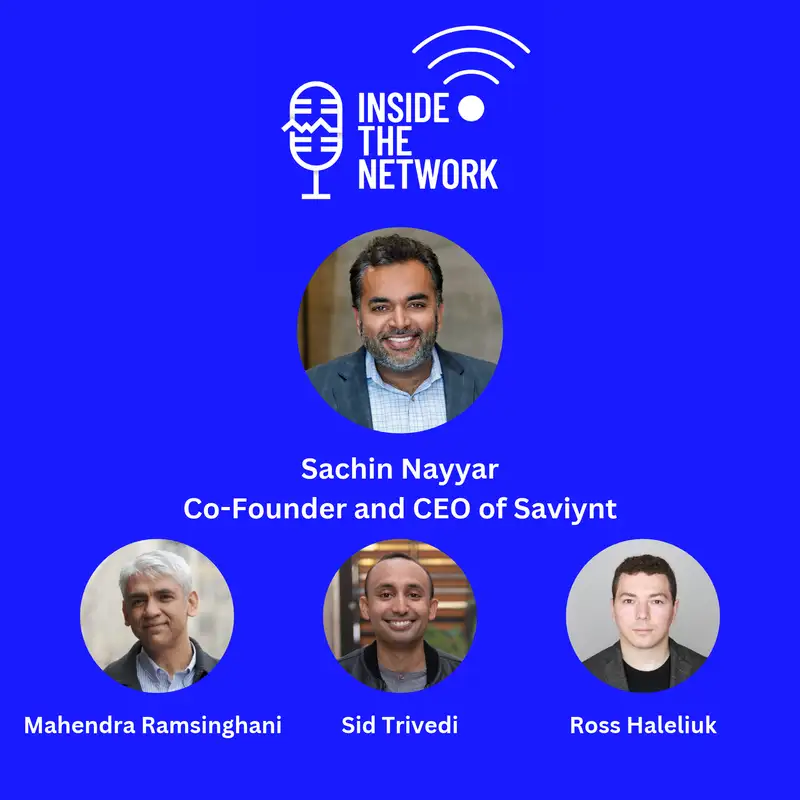
Sachin Nayyar: Building two cyber giants - Securonix and Saviynt - at once and doing it his own way
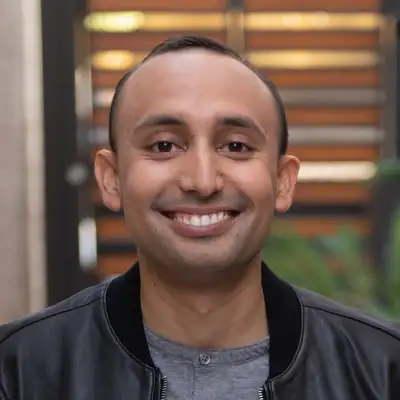
Download MP3Welcome to Inside the Network. I'm Sid Trivedi.
Ross Haleliuk:I am Ross Haleliuk.
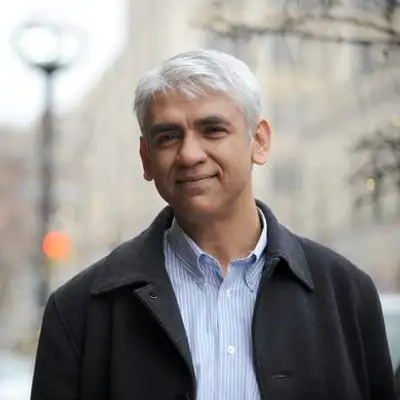
Mahendra Ramsinghani:And I am Mahendra Ramsinghani. We have spent decades building, investing, and researching cybersecurity companies.
Sid Trivedi:On this podcast, we invite you to join us Inside the Network, where we bring the best founders, operators, and investors building the future of cyber.
Ross Haleliuk:We will talk about the hard parts of the founder journey, launching companies, getting to product market fit, raising capital, and scaling to an exit. And, yes, we will also be talking about epic failures.
Sid Trivedi:But, Mahendra, we're here to make the founder journey easier.
Mahendra Ramsinghani:That is correct, Sid. But we cannot make it too much easier because startups are hard, And, of course, you already knew that.
Ross Haleliuk:Alright, you two. Enough. Let's get started with this week's episode.
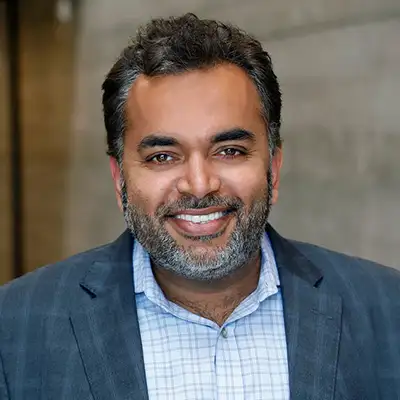
Mahendra Ramsinghani:What kind of a founder builds two cybersecurity unicorns, both at the same time, and can run both of these companies for a decade as a CEO? Our guest today is Sachin Nayyar, who has built Securonics as well as Savient. But valuations is not the most interesting part of his story. Sachin became a millionaire in his twenties when Sun Microsystems acquired his first company. After a bit of a celebration, he fell into depression.
Mahendra Ramsinghani:And years later, he confronted Burnout again, this time while running two unicorns at the same time. Securonics, a sim and an analytics company that Sachin co founded and ran out of Dallas, pioneered UEBA or user and entity behavior analytics. It was acquired by Vista Equity Partners in a deal that created over 50 millionaires across his team. Saviant is an identity security company headquartered in LA, which was bootstrapped for seven years and has now crossed over 300,000,000 in ARR valued at 3,000,000,000. Sachin has made some unconventional choices by building these companies outside Silicon Valley.
Mahendra Ramsinghani:One in Southern California and another in Texas. What were some of the challenges he encountered while building two companies at the same time? A paddle, not a serial entrepreneur, How did he raise capital outside of the valley while bootstrapping a company for seven years? How did he manage teams, culture, and above all, how did he manage his own recovery from burnout and depression? Let us dive in.
Sid Trivedi:Welcome to Inside the Network.
Sachin Nayyar:Thank you. It's good to be here, Sid.
Sid Trivedi:We're gonna talk about a whole bunch of different topics, but let's start by talking about the immigrant founder. You grew up in India with your whole extended family under one roof before immigrating to The US, and you started out at Ernst and Young. Looking back, what was it like about those early days, and how was the family, the move, and the early work? What if that kind of convinced you that cybersecurity was not just a job, but a singular obsession that you wanted to dedicate your entire career to?
Sachin Nayyar:Yeah. Thank you, Sid. Again, great to be here. Great place to start to reminisce a little bit. So, yes, I was born in New Delhi and, you know, with a big family.
Sachin Nayyar:That's quite an experience. I'm very lucky to have experienced that uncles, aunts, grandparents under the same roof. Unbelievable. So I think that that has helped me deal with people from all walks of life and people with different emotions. It's, I think, helped me build the level of EQ that I have.
Sachin Nayyar:I always pride myself in my EQ. You know? I I always have much more smarter people than me in every room on IQ, but I can connect the dots. That's helped me a lot. And then I came to The US when I was 16.
Sachin Nayyar:Unlike a lot of other folks who come from India for masters, I actually came for bachelor's, which is... Has a different impact on you because you're much much younger. And I did my bachelor's here, computer science and business, and through that, found a job at Ernst and Young, you know, which was the top echelon of companies that came to recruit at my college. And and the experience, I mean, I I owe a lot to I was just honored recently to get entrepreneur award, you know, which which was so meaningful for me because life came a full circle. And and, you know, through they introduced me to the world of cybersecurity, to the world of security and compliance.
Sachin Nayyar:And to your point, it just you could just see the way where auditors were coming from. So I was a technical auditor, not an auditor auditor, but the technology person helping the auditors. So I'm I'm very uniquely qualified to understand their thought process on what are they really looking for, that they are not adversaries. You know, they are there to help a company, and that really helped me. And I was able to also get in front of some of the largest organizations in the world, largest enterprises in the world, which is not easy, and and understand problems at scale and how we could really add value to their business.
Sachin Nayyar:So I'll pause here, but lots of great learnings there, which has really set the right foundation, I believe, for my career.
Sid Trivedi:And did you always want to do cyber when you joined DUI? Was was cyber the area that you're focused on, or or did you kind of fall into it?
Sachin Nayyar:I wanted to do technology in general, broad technology. Right? An accountant, so I did not want to be an accounting auditor. So I wanted to do technology. I'm a technologist.
Sachin Nayyar:And the group I was with UI at that time was... They just started this whole security practice. They had the compliance practice all along, but they started the new security practice. And because I was one of the more technical folks in the team... On the team, you know, I got an opportunity to be on that group and learn from some of the best.
Sachin Nayyar:And a big shout out to all the UI leaders, you know, Cheryl Merson, Jeff Rosek, Mike Gartner, all my mentors who taught me a lot.
Ross Haleliuk:When Sun acquired your first company, you became a millionaire in your late twenties. You've been unusually open that it sent you into a deep depression to the point that you took a Stanford course on living in wealth. Most founders send that moment as a pure triumph. What did that crash actually teach you about your own wiring, and how does it change the advice that you give founders about what to do after their exit that they've been dreaming of actually comes?
Sachin Nayyar:Yeah. It's a great point. So, you know, after I left I started YU. I learned a lot on the product side. Is very good on the services and solution side, but I had to teach myself from the very beginning product and really dedicated myself.
Sachin Nayyar:I mean, at I was technical. I was building tools for them, but really building an enterprise grade product. I learned a lot, and I learned more through Sun when we got... And then why you got acquired by Sun, like you said. And I've been very public about it.
Sachin Nayyar:I mean, it's like a dog chasing a car. You know? You get to the car, and now you don't know what to do with it. So now you're working sixteen hours a day, and all of a sudden, boom, it's all gone. You don't even know what it means.
Sachin Nayyar:So that was a tough time because you need to... Now all this work that you've done, you've gotta get out of it and now look for new... It's it's like a sportsperson retiring. I think that's a good analogy. Right?
Sachin Nayyar:If you see what happened with Michael Phelps, you know, once he got to Olympics, that's pretty publicly documented. Right? That how they go through the downs of the depression and then find the next chapter in their life, and that's what happened with me. Right? I was so dedicated to my sport and worked on it day in and day out the same way like a sports person does it.
Sachin Nayyar:And then I had to rediscover my passion for my work and found that and then was able to now balance... Over a period of time, now able to balance that to go at 100 x the speed but understand what is important. Right? Family, friends, and making a difference with the enterprises that I work with. So it's it's changed my perspective, and I think that's my lesson to all the entrepreneurs.
Sachin Nayyar:What I always think about is there are a lot of entrepreneurs who are in love of being an entrepreneur versus trying to solve a problem. So my number one answer is, are you looking to solve a problem? Are you in love with the problem? And that's when you should start something, not because you just want to be an entrepreneur and and you're an answer looking for a problem. Right?
Sachin Nayyar:So I think that's my personal advice.
Ross Haleliuk:It does make sense, but I would argue that when the company gets acquired, the problem probably still remains unsolved because no company is ever able to solve their problem to the fullest. How do you as an entrepreneur then live with the idea that you know you're not 100% done, and yet your ability to still continue solving that problem becomes more limited than before?
Sachin Nayyar:You know, that's... What do they say in baseball? That's a easy ball that you've thrown at me. That's what Saviant is. You know, this is now our evolution of that identity market that I started with and moved to Sun and now Saviour is now my attempt to finally solve that problem and solve that problem at scale.
Sachin Nayyar:And I believe the whole... Not just... I mean, everybody talks about AI, but not just talking about AI and identity. We're talking about AI in the IT infrastructure. You know?
Sachin Nayyar:Now we have an ability to embed identity when applications are being built. I won't spend too much time there right now because we are not at that topic, But the point being that that, yes, the problem was not solved. I thought my kids would solve the problem, but they have their own careers now. So I I am ready to solve it myself, and I think I think we're on a path with Savion where I believe we will make Savion plus the movement in the market in IT. We will make a very meaningful dent to solve this problem just like what the cloud providers have done for IT availability.
Mahendra Ramsinghani:You described this very eloquently, Sachin, love for being an entrepreneur versus love for the problem. And, clearly, you love the problem of identity and cybersecurity so much that you were once running two companies both at the same time. And then comes a time when you recognize this fog of depression that sets in, and you decide to step back. Now this is a very complex topic with its own challenges. I've tried to touch upon this in my book called The Resilient Founder, and we look at how in society, founders are often cherished to be the heroes.
Mahendra Ramsinghani:But when they go through their dark times, they're often trying to deal with these situations by themselves. Now what were the changes that you made that allowed you to, as you once described, to run the marathon at full speed without burning out?
Sachin Nayyar:Yeah. I think burnout is not a badge of honor. It is a weakness in your discipline and in your mindset. Because what is the point of either solving the problem or making money if you don't have mental or physical health or your family around you or your family and friends around you? Right?
Sachin Nayyar:You gotta prioritize the right things in life. Right? And and, you know, it doesn't mean that you're not going to go after the problem as hard as ever, but the right level of discipline and the right level of balance actually helps you solve the problem the right way. Right? So so I don't think that's a badge of honor.
Sachin Nayyar:I think I've learned the hard way, and and now I'm committed to helping others solve that problem. And that's why I created a holistic health company to help myself, and I'm much better off. I'm mentally and physically in my best shape and and to help others as well. So for sure, I think we all need to take a moment and and reassess, and there are small techniques that you can do. You know, meditation is a heavy word.
Sachin Nayyar:I would say light mindfulness, you know, and changes in your schedule. I follow intermittent fasting, but please don't do it. I'm not a doctor. Don't do it because I'm telling you. You know, anti inflammatory stuff.
Sachin Nayyar:So some changes in your life, diet, lifestyle, and introducing a few things like a gym exercise, little bit for the mind, I think are important to put things in perspective. A little bit of gratitude, meditation, five minutes. Unbelievable. The impact of that on your life and and people close to you, including your coworkers, including your team, who will start seeing a person who is firm but but respectful and and who understands their priorities. If you look at the best...
Sachin Nayyar:I'm a big fan of Jeff Bezos. We're distant, but look at the priorities, how we set the priorities. And that's how you build bigger things and special things versus just going crazy and burning yourself out. There's no honor at that.
Sid Trivedi:Is there maybe such a one thing that you'd recommend for our listeners to do? Just something simple, not not something like intermittent fasting. But is there one piece of advice around this topic that you say, hey. I'd recommend you do x as just one example.
Sachin Nayyar:Yes. I think sleep. Number one, sleep. The basic thing is sleep. So if you are not sleeping for seven hours a night, you are doing yourself disservice.
Sachin Nayyar:There is, again, no badge of honor in telling anybody that you slept for two hours or you pulled off two all nighters. Listen, I pulled off my fair share of all nighters. Right? And I even have to do it even now once in a while when we are in the middle of something big, but but that's not my default. Right?
Sachin Nayyar:It comes with a lot of exceptions. So so number one is sleep, and check out lybl.com. That's my health care, holistic health, where we have done a ton of work ton of work to bring the best of the best to the market.
Sid Trivedi:Thank you. And we'll add that to the show notes as well for others. Let's go back to company building, and let's talk a little bit about scaling. You founded Securonics and Savient within a couple years of each other. You had a detection company and an identity company.
Sid Trivedi:Today, the industry has invented a whole new category, ITDR, identity threat detection response, to bolt these two words together. You had both under one roof for nearly a decade. What did running them side by side teach you about where identity and detection actually converge, and why didn't you decide to just merge the two companies together when you had the chance?
Sachin Nayyar:So, yeah, both the companies were started around the same time, and, you know, I moved one of the companies to Dallas so the teams would be individual and would be able to focus on their problem statement and on that company. And we were very lucky to create two great companies. You know, Seconics, we had a great round or an exit to a PE buyer, right, which which was great for the team. And then now I'm back with Savient where, you know, where we are doing great and, you know, had a recent great fundraise. But why didn't I bring them together?
Sachin Nayyar:Listen. At that point, the market wasn't ready. The market was barely thinking about user entity behavior analytics, which we created at Securonics. We actually combined identity with logs to create UEBA, user entity behavior analytic, entity being an identity. Right?
Sachin Nayyar:And then extended it to SIM because UEBA became an insider threat too, so we extended it to the SOC. And we made... Our goal was to make SOC identity aware. Right? And look at identity enabled threats and identity enabled triaging.
Sachin Nayyar:Right? So so that was that was Securonics. But the market just wanted more and more of simple detections. And and and it's all evolving. Same in...
Sachin Nayyar:Is more in the identity management and now... Was in the identity management, now moving to identity security. Right? And at that time, the market wasn't ready. And, you know, obviously, you know, combining companies, combining teams is is not as straightforward as as it seems.
Sachin Nayyar:And the teams were doing well. The companies were doing well. That wasn't the right time, and I think, you know, at... Now we have the ability with AI to do great things. So we'll see how how Savient identity for AI evolves, and and we'll take it from there.
Ross Haleliuk:From roughly 2010 to 2018, you were simultaneously a CEO of two companies, of Securonics, a detection or SIM company in Addison, Texas, and Insavient, an identity company in Los Angeles. You were physically commuting between those two. In a practical sense, how did you split your brainpower and the time between the two companies, And what's the single biggest management mistake you've made while trying to run those both companies at once?
Sachin Nayyar:That's why I'm the perfect candidate for holistic health because I have broken every part of my body and mind and and pushed myself to the extremes extremes. So it wasn't just managing two companies. It was building two companies. Right? As a founder, I mean, going to Dallas, I now have PTSD going to Dallas Airport.
Sachin Nayyar:So, you know, going to Dallas, spending time in Edison, afterward going to the bar every day, spending more time with the team. I am a champion at darts and late night tequila and mezcal shots. I I was I was a champion no longer. So, yes, it was very intense period because as founders, we don't know where to draw the line. It doesn't come naturally to us.
Sachin Nayyar:Right? We don't take no for an answer from ourselves or from anybody. Right? If we think of something, we want to get it done today. Right?
Sachin Nayyar:Which is... These are all my traits even today. But but, yes, it was a major assignment that I took on, and I'm very happy for it. There are absolutely no regrets. I've built great teams, great partners, and I wouldn't be half the person that I am if I didn't get that level of experience.
Sachin Nayyar:Don't know about the management mistakes, but, yeah, I think the biggest management mistake that we rectified was not having a proper operator on the team. So what that means is both my teams were me, maybe a cofounder or a group of cofounders who were good at their park technology, sometimes, you know, an engineering cofounder, product, and go to market leaders. But what we were missing is is a COO or an operator who had the experience, who would bring that level of market discipline and rationalization to us to say, hey. All great exciting ideas, but let's calm down and put a structure in place, put the right budget in place, put the right KPIs in place. Right?
Sachin Nayyar:So in early days, we did not have that. For several years, we did not have that, and that, I think, caused... Actually slowed down our growth because it was a lot of internal conversations and sometimes not so productive. The moment we brought a great COO to to Securonics at that time and and a great go to market partner at... To Savient, both the companies changed completely.
Sachin Nayyar:Right? So I think a big message for younger founders, right, have the vision. We want to get on top of the mountain, but you need somebody who brings that level of discipline and reality to the table. So I think that was huge for us. And and and, again, I thank our our board for helping me do that, and big kudos...
Sachin Nayyar:Big shout out to my friend Dave Colasante who took that role and really helped us move forward.
Ross Haleliuk:This is a fantastic story. And before we move on to the next question, I really want to double click on this one because it's not often that we get to talk to founders on this podcast that run two companies simultaneously. So my question to you would be, what was it that drove you to say, you know what? What I think makes sense... You know, I know building companies is hard.
Ross Haleliuk:I've done it before. And what I really think makes sense is to run two of them at once. And moreover, how are you able to sell that to investors? How are you able to sell that to the people? You know, I I would suspect people would question either your sanity or your level of commitment when it comes to either of those.
Ross Haleliuk:Like, how did it look like?
Sachin Nayyar:So listen. At value, my first company, I was the writer, director, producer, actor, everything. So then I thought, I've done it. I've sold the company. You know, that was the one where I was in my late twenties.
Sachin Nayyar:And now I will, you know, work with the team. I've built such a great team. And, you know, now I will be more of a producer, right, and put the right teams in place. And we had two great areas of focus. Right?
Sachin Nayyar:Identity enabled threats and identity management deep within the applications like SAP, etcetera. So we said, okay. These are the areas. Now there were two strong groups of people, so started working with them. And the idea was that they would start running with it.
Sachin Nayyar:But, you know, as it works, every company has its own journey. Every company has its own story. No matter what you start with, a company is a living entity, and it has its own process. So then over a period of time, you know, my sort of natural instincts took over, and then I became the same. Right?
Sachin Nayyar:And like you said, then absolutely people would question. You know, once you see show show some success, then then they still question your sanity, but not as much. And I'm sure they did, but not in front of me. So so your point is well taken. And and and definitely the commitment.
Sachin Nayyar:Right? So that is why the moment I raised the first round of money in Securonics, I gave up the CEO role of Saviant. And that was... I did it myself. Right?
Sachin Nayyar:Because because what I did not want to do, and I believe that was absolutely the right decision, you know... I mean, Elon is too big now. He wasn't as big at that time, and Jack Dorsey wasn't as big at that time. And they would keep referring to Jack at that point and, you know, when he was trying to go off of Twitter. But the point being, you know, what happens is when you're working so hard and you give everything to your companies, which I do, if you're not available for a VC call or a investor call or a board call, they immediately think, what is this person doing?
Sachin Nayyar:Are they not committed to the job? Right? And same with your own team. So I did not want that dynamic that as a CEO and a leader of the company, I have to keep justifying myself or explaining to myself. I don't have an ego like that.
Sachin Nayyar:So at that time, I decided to move to Securonics because it was it was a much more difficult problem to solve. The company was in Dallas, and I think the company needed me more. It was more spread out. So I took that role because Savion is seven minutes from my house. The Savion headquarters, the team was doing identity management and security, which I had done for many years.
Sachin Nayyar:So I got on the board of Savion and just dedicated my time to Securonic. So so there was never a time where we had investors and a real board that I was working for two companies. I think that would be very difficult to... Unless you had the same board members.
Sid Trivedi:Well, you know, let's talk a little bit about this topic exactly. In 2018, you you mentioned this already, but you handed Savient to Ahmed Sachin, and he became CEO. And you went all in on Securotics. And then in 2023, you effectively reversed course. You exited Securonics through the Vista acquisition, and you returned to Savient as CEO.
Sid Trivedi:Walk us through that decision making, the decision to kind of swap back and do the second act as CEO at Savient and and and move away from the chairman seat. And how did that compare to just staying on at Securonics after you had just had this billion dollar plus outcome and and Vista had kind of said, hey. Let's go and scale this even further.
Sachin Nayyar:So listen. I think my mission at Securonics at that time from my perspective was done. I took the company to a place where I thought my skill set at that time would be able to take the company. Right? I assessed my skill set.
Sachin Nayyar:I gave it everything I had. Everything. Right? And we got to a great place. We created 55 millionaires.
Sachin Nayyar:The whole team... We had only, I think, what, 40,000,000 in debt and 40,000,000 in equity. So it was a very well run company to have that kind of an exit. My entire team that reported to me and maybe even one level below that had life changing exits where most of them don't need to work again. Right?
Sachin Nayyar:So our investors got seven to nine x, and they were doing backflips. So, you know, we we satisfied everybody, and and our board, everybody who was engaged, we had... It was a great exit, which is very unique in the industry. The person who wrote the first line of code was with the company. The person who sold the first deal was with the company.
Sachin Nayyar:I mean, how many times does that happen? Right? The whole team was intact, and we are still great friends and do many events together. So that was such a great outcome when we went through highs and lows and and and built... If...
Sachin Nayyar:Solved a very, very, very difficult problem, which which a lot of enterprises or software companies are still struggling to solve. Right? So at that point, you know, Vista is such a great operating machine. And the next chapter of that, like you said, was going to be more scaling, and I'm more of a bigger problem solver. Right?
Sachin Nayyar:So for me, I thought, you know, this would be the time to move. But what I did was I was the buddy for our new CEO at Securonics to to share with her my point of view on the industry. But what happened is through that exercise, I learned a lot from her her point of view on operations because she was a disciplined operator. Right? And and I learned a lot from her just in small conversations that we would have on how she thinks about the business because I knew the business I had built.
Sachin Nayyar:But looking at that business from another operator's perspective on how she viewed our cost structures, how she reviewed our technology support, go to market, every part of the business, it was an amazing learning for me to to spend again from from her. So so then I decided to come back to Savion because I felt that that the learnings that I had with Securonics, with Vista, and I spent a few months with Vista, and then with the CEO would actually help me and Savient take Savient to the next level. Because Savient, at that time, was growing well, but stuck at the same point or one step below where I had sold Securonics. So I had a firm belief, and and, you know, hopefully, we can all see that the belief has come true that, you know, we are... We just crossed 300,000,000 in ARR, and we are growing at over 30%.
Sachin Nayyar:But that's that's all because I came in with... Not with the I am a founder. Let me go back. I came in as a operator, founder operator, who was very thankful to the board, the board that let him back, and and very thankful to the team that that accepted me. But I was a new type of a person and operator, not what the Savion team knew me as or even the security team knew me.
Sachin Nayyar:In those six to eight months, I had grown a lot as a leader, and I really believe that would help Savion, and I can... Hopefully, everybody can see the results of that.
Sid Trivedi:Super helpful. And, Sachin, you know, one of the things that was so exciting for Ross Mahendra and I when you agreed to join us on this podcast was that your journey for both of these companies is very different to a typical founder's journey, in that you raise, you know, different types of capital, you bootstrapped the business, you built outside the value. There are a lot of things you did. So let's dive into a couple of those topics, and let's start with, you know, the fact that Savient was self funded for over seven years. You mentioned this point before you raised that first round from Carrick, and they led a $40,000,000 series a in 2018.
Sid Trivedi:And then after that, you lean quite hard on on debt, which typically here in the Valley, we generally suggest that you don't do that as actively. But you lean pretty hard on debt. You raised hundreds of millions of dollars from folks like AB Private Credit and PNC Bank. Take the founders inside that choice. You know, how did you think about growth equity, and when does debt genuinely beat traditional equity, and what were the trade offs you were thinking about?
Sachin Nayyar:Yeah. I'll share my perspective, Sid and team, and please... I'm a novice at this. So, you know, I I know what I do, and I really trust myself to make the right decision in the moment. So, you know, when I came back to...
Sachin Nayyar:So first, like you said, my journey has always been my own journey. Right? And because I'm not in the valley, so I think that that is good and bad. I always say I make movies sitting in Canada. Right?
Sachin Nayyar:So I I don't get any any noise from the valley. I I am, like, in an island in LA by myself in tech and cybersecurity. Not anymore, but but used to be. So our decisions are always based on what information and knowledge I have and what I think is best for the company. So, you know, obviously, I come from a...
Sachin Nayyar:I have my roots from e and y. So I know that you can make money or fund yourself early days when you're looking for a product market fit through services. And it's not about funding doing any services. You're doing services for the space in the space where you want to build the products. Right?
Sachin Nayyar:So what is the point of building if... Unless unless you have been in a company and have spoken to customers, you know, which is the other paradigm. Right? Get the design customer to build the product. So I did not have that at that point in time.
Sachin Nayyar:So what I had to do was sell my expertise because I knew the industry, and they knew me that I I had expertise in the space. So I was able to sell mine and a few of my key team members expertise to go in and spend time with customers that they were paying us for, and through that process, build our product, even try our product in those environments. So it was unbelievable for us, right, because we were looking at real customers, real data, real problem statements, and they started using early versions of our product. So it was sort of the best of all words. Right?
Sachin Nayyar:I mean, how much are we willing to give up for design customers today, and these customers were paying us? So because we were from that industry. Right? So it gave us that sort of a unique perspective, and that's how I was able to bootstrap the companies, and more importantly, have a lot of conviction in the product and the capability that that we were building. Right?
Sachin Nayyar:So the only time I went out to raise money was because the world had moved to cloud. We... You know, our products were now in cloud. The infrastructure costs are very high. So it was not about the development and the software cost.
Sachin Nayyar:It was the infrastructure cost And to really then now move the company to a proper... Per company and scale it out, that's the time I went to raise money and honestly build a board, right, which which was very, very helpful. So that's sort of how that process went. And then why did I come back to Sabient and choose that? Listen.
Sachin Nayyar:I... At that time, the markets were depressed when I came back. Three years ago, market had just gone down, and I believe the company was worth a lot more than what the valuation we would get from the market. And I was very confident in the core bones of the company, the product, the customers that we would have... That our valuation is much, much higher.
Sachin Nayyar:Right? So at that point in time, we decided to go down the debt route and build good relationships with our debt providers. They are... We are great partners with them. They've been amazing to work with.
Sachin Nayyar:And after that, you know, the valuation is now whatever, five x, four to five x of that in in two and a half years. So, you know, we bet on ourselves. It's not a safe bet, as you know, from a finance perspective. But if you, as an entrepreneur, if you're gonna bet on anybody, you bet on yourself. Right?
Sachin Nayyar:And that's that's what I did.
Sid Trivedi:Did you ever consider going to The Valley and doing the tour of VCs, whether that was for the early stage round or for a growth round, and why or why not?
Sachin Nayyar:I think... I mean, we did. We we did not do a full tour, but we did a few connections. And, you know, the VCs in the Valley at that point in time actually did not understand us. For them, we were a weird bird.
Sachin Nayyar:Right? We didn't even know how to classify us because Valley has a few good playbooks and templates. Right? How many rounds you're gonna have, etcetera. Right?
Sachin Nayyar:And and when you show up with five years under your belt or four, five, or six years under your belt, 15,000,000 in ARR, the VCs in the Valley just don't know how to place you. And, also, the connection wasn't there because they're trying to... First, they don't know how to place you. Secondly, they're trying to put you in one of their own templates. Right?
Sachin Nayyar:Again, it's not right or wrong, but, it wasn't my template at that time. So so I didn't understand it, and and that's why that connection didn't work. So then when we when we raised money in Securonics, we raised money from an East Coast investment firm and a big shout out to Volition Capital and Roger who were just amazing to work with, and then Savient from Capital, which is a Valley and LA company, not the traditional Valley company. And and they... Both of them, to their credit, spent time with us to understand us.
Sachin Nayyar:Right? Because they weren't one of the top names, so they had the time. And... But we got lucky with the right partners and leaders from them who helped coach me and coach the team to build the right balance again of what our strengths were with customers and solving customer problems to build scalable and enterprise products. So it's...
Sachin Nayyar:Listen. It's it's been a great journey, and and I think for me, the last point is I think money is means to an end. Money raising is means to an end. It's not a badge of honor for me on how many rounds I have raised. For me, every round for a founder and the team means dilution.
Sachin Nayyar:So I am very careful about it. I I run a very disciplined company. I'm not interested in diluting myself or my team. Anything more than required. And if we are diluting, I should have a clear plan of how I'm gonna connects that valuation for the investor and for us.
Sachin Nayyar:So my goal is my next round will be this much. My goal is always sure ARR, NRR, and GRR, which is the retention, and NRR is really what I gravitate towards, and that results in the right level of growth. So I focus on the customer, and that will result in the right level of growth for us. So it's a different mindset.
Ross Haleliuk:And kind of continuing on this exact thread, so as you've said, you've built Savient out of El Segundo with roughly 600 engineers in India, while Securonics ran out of Dallas. You didn't build these companies in the Bay Area like Okta or even in Austin like like SailPoint. For a founder today who is convinced that they need San Francisco ZIP code or maybe a Tel Aviv ZIP code depending on on how the companies are being built in order for them to build a serious cybersecurity company, what does building across LA and Bangalore actually give you that the value cannot, and what did it cost you?
Sachin Nayyar:I think the ZIP code you should care about is your ZIP code and letting it shine. Because I haven't seen in any sales meeting where your ZIP code, you know, you... Your product, team will speak for itself. So for me, listen. We...
Sachin Nayyar:I've always been in LA. So... And we we created a great influx of talent from USC and and some from UCLA. But but we created a great influx of talent for these companies. And in Securonics, we created a great influx of talent from universities in Dallas and even UT Austin and others.
Sachin Nayyar:But the point is, you know, we were able to bring the right talent. We knew our market, and the other thing we did was we built with a lot of college talent. That was another key strategy for us early days because the folks coming from college who are masters, mostly masters, a lot of immigrants, and who are able to just dedicate and focus and and work around the clock. And we were able to, again, get in front of customers and give the customers what they wanted. So now as we are moving to scale, Savion now has a very big team in the Bay Area.
Sachin Nayyar:We have a very big team in Bangalore, which is the Silicon Valley of India, and where we now see the results of of how we can scale. So we just opened our first Savient office in Milpitas, and there is a huge team there. So as we are growing, we now see the the value in it. But, you know, early days, we just kept it small, and we kept it very focused, very dedicated, and and it's it's never really bothered me. I mean, it's just one variable.
Sachin Nayyar:You just work through it. What would you have said about Amazon building in Seattle way back when? So same difference.
Mahendra Ramsinghani:Indeed. That's a very good point, Sachin. For founders with conviction, whether it's El Segundo, Seattle, Dallas, it re... The ZIP code really should not matter as much as the conviction with which you can solve the problem. Now last year, in 2025, Savion raised 700,000,000 led by KKR in a deal that valued the company over $3,000,000,000.
Mahendra Ramsinghani:And you've raised money from private credit, growth equity giants like KKR. And help us understand your thinking around raising to grow versus raising to help early shareholders and employees get liquidity. These are two separate things, and sometimes they can be in conflict of each other.
Sachin Nayyar:I think raising to grow and and also raising to give some employees liquidity do not have to be mutually exclusive. Right? I think that's a very important point. So I am, again, a very big fan of risk ladder and growth ladder for the employees. Right?
Sachin Nayyar:So even in this round, we had some secondary, and we changed many lives. And we are very thankful to the team, you know, that did the work, And the morale of our company and our team is at an all time high, not because they are looking at a sheet of paper or what the company raised in a private market, but but they're also looking at their own bank statement. So we actually were able to bring it together very thoughtfully. Right? So we got money for the company to grow.
Sachin Nayyar:We are also able to give money to current and ex employees and some of the key employees as well. Right? So for me, it comes together. I want to make sure... I'm very keen to make sure that when people put in the effort...
Sachin Nayyar:You know, we are we are very focused on hiring and then keeping the right team members. That's very important, you know, who really are moving the company, who come in with that 10 x mentality. But then when you're here, and then we demand a lot from our team in terms of focus, time, commitment. But when you do all of that, we we owe those people back that their shares would mean something. And so first, I don't play any financial games or gymnastics with...
Sachin Nayyar:Ever with any of my team members, right, because they are unaware of how some of these things work. So I... My first goal is to protect them, and my team trusts me a lot to always do the right thing for them because I I pride myself in going out of my way to do the right thing for the team. And I take a lot of pride in that, and that's how... Why I sleep for those seven to eight hours every night.
Sachin Nayyar:No problem. Right? So those two things come together, and I think we can grow while providing the team members, you know, the right level of liquidity at different stages in their life. You know, as somebody is raising their kids, wants to buy a house, you can provide them that level of... When the company is doing well, investors are happy to buy, as you guys know, the secondary stock, And and we should create that opportunity, and there should be no ego about that.
Sachin Nayyar:And you need to take the pressure off the team so they can do their best work.
Ross Haleliuk:And talking about making the people's shares worth, where does an IPO fit in your plans?
Sachin Nayyar:You know, listen, we are running the company with the discipline of a public company now. So so we have started working with our board, calling the numbers internally to build that muscle and see how ready we are. We have been able to do is bring in some CEOs on our board who have experience with public companies... Running public companies. We've been able to bring CEOs who have experience in running PE companies, right, who keep us on track with discipline.
Sachin Nayyar:So so our goal is to run Savient like with public discipline, and at the right time, we can make a decision. You know, private markets are great nowadays. So, you know, as long as we have optionality, we'll be fine. And that's how we think about it today.
Sid Trivedi:As we get into the last section of our conversation, we wanna go and talk a little bit about AI and and AI agents and just speak a little bit about the advice for the next generation of founders in this modern age. Let's start with AI. Everyone in identity is now racing to secure AI agents, but your bet is much more subtler. You're using identity security for AI and by AI. And this is, you know, your product, Zuma Governance.
Sid Trivedi:You're automating a lot of governance itself. There's this obvious paradox in using AI to govern AI. If agents are increasingly deciding what other agents can access, then where does the human accountability actually live? And what's the failure mode that's created in that model that that worries you as you think about things in this new evolution? It's a
Sachin Nayyar:great point. So our goal is to protect the access of the agents, but also the access... What what we have is, I believe, AI and this new change in IT infrastructure is giving us an unbelievable opportunity to embed security within our... Move security to build time. We've talked about security at design time.
Sachin Nayyar:We've talked about security or admin time. We've talked about security at run time. I wanna talk about security at build time. Right? Moving controls left.
Sachin Nayyar:As we have seen with and a lot of these tools, vulnerabilities are now moving to build time. Right? So now put the AI tools at the time of code, and it starts detecting vulnerabilities. We already know AI tools were there as part of the CICD pipeline detecting vulnerabilities. The same principles apply to identity and access.
Sachin Nayyar:Right? So so far, what has happened, every company is building these SaaS applications or vendors are building these. Companies are buying SaaS applications. They all have their security models are set within them. Right now, the SaaS companies are opening up MCPs.
Sachin Nayyar:Everybody's opened up their MCP. We have opened up ours. And enterprises are building applications themselves, right, in the periphery of these SaaS products, right, to bring things together, agentic applications, which a lot of times will have financial information. They will have critical customer business information. Those applications that are being built, identity and access management should be embedded within those applications from day one, not build them and then try to integrate them the traditional SaaS way.
Sachin Nayyar:They are not SaaS apps. They are homegrown bespoke apps that should be there, and the same identity and access management should be integrated deeply within the MCP servers of these SaaS companies. So we have a very unique opportunity where we can actually move identity and access controls to the left and start solving the problems at build time because no CSO or chief risk officer can keep up with the number of agents and the number of applications that are being built now. So you cannot expect them to use the traditional models of integration. Let me integrate, bring the data, or let me just authenticate your user or your agent.
Sachin Nayyar:The controls have to shift left. Everything should be at built time with a embedded policy engine within the application, within the agentic application or within the MCP. That's what Savient is building, right, which we think will completely change the game in the market and provide identity as almost like a drag and drop capability. And that's why I mentioned earlier that I think we are close to solving this problem now, finally. That we can provide identity with all the controls, segregation of duties, and all the right level of controls within the application itself.
Sachin Nayyar:And the application will just automatically connect to your compliance and security portals, and your CISO and your auditors will be happy. So so this is this is a huge opportunity, and and that's what Savient is building. And that's where I believe the market and the industry needs to go to to put identity and access controls within the apps and within the agents. So that's our thought process that Savient should be a secure identity development company is is the thought process, And this is how enterprises should think about it. Right now, in terms of the founders, we all know no better time than than now to keep building with AI, but but also know that, the traditional companies are also trying to move really fast.
Sachin Nayyar:So get your design customers in, move at a fast pace, put the right team together, the right pieces, and solve a problem. Don't try to boil the ocean. Solve a problem. Be very articulate about it and very crisp about it, what you're solving, And and I think that's... That would be my, my recommendation.
Ross Haleliuk:Sachin, how are you... I'm very curious. How are you thinking about the competition, especially in the context of there being just so many startups all talking about identity. There was this whole wave of NHI companies that came into the market, and now the number of companies jumping onto the... Really, the idea that they can also tackle this big problem.
Ross Haleliuk:We had the the CEO and and founder of SailPoint on our podcast as well, Mark McLean, who was talking about sort of his perspective about the evolution of the industry and and where things are going. I'm very curious how you see it, and how do you see the ability of your company to withstand just this onslaught of the large number of new AI native startups coming into the identity space?
Sachin Nayyar:So listen. I consider Savient... My my slogan for Savient internally is we are building a startup at scale. So I am still the same 20 year old guy who started his first company. I still have the same energy, focus, fire to take on any new challenge.
Sachin Nayyar:Right? So for me, we are actually in a great place. I feel so good about, again, solving this problem and and making sure Savient is one of the leaders. This is our opportunity. We believe we are one of the most innovative, fast moving technology companies in this space today.
Sachin Nayyar:If you look at our engineering teams today, they are world class. We have added so much great talent that goes back to the Bay Area office. In the last few years, we've been able to attract the type of talent, which is unbelievable, blows my mind, the speed at which we are moving. If you look at some of the work in Zuma, we launched the whole gateway. We launched visibility.
Sachin Nayyar:We are launching governance. We are moving faster than most startups would. So what we provide customers is the same level of speed or faster. And with the security of a company which was valued recently at 3,000,000,000 and who... Which has some of the best investors in the world on its cap table now.
Sachin Nayyar:Right? Because customers are also worried because every day, some of the new startups are being sold. They get something it engage... Because identity is... It's it's deep in your company's infrastructure and your workflows.
Sachin Nayyar:So you just cannot deploy and and undo it. So the moment you you deploy, the companies are getting sold, and that's leaving the enterprises in a no man's land. So that's our focus. And listen. I'm I'm not so worried about competition.
Sachin Nayyar:I focus on customers. I focus on our culture, and our culture is is a culture of very fast development. And at scale means high quality, resilience, security, and we are putting a lot of effort on those areas and really building the company and the products that we would be proud of and our customers would be proud of, and and that's that's what we do. I think me and our team are doing some of our best work ever right now.
Ross Haleliuk:Sachin, machine and AI identities now outnumber humans by more than 80 to one or sometimes even more depending on whom you whom you read and whom you listen to. That seems to break the per identity pricing model that the whole industry has relied on for a very, very long time. How are you rethinking how identity security should be when a single employee can spin up dozens of agents overnight and then spin them down and and do it again and again and again?
Sachin Nayyar:We are still thinking through all of those things just like a lot of the industry is. You know, we are... The first proposals are to put together what the active identities are, you know, that are really, you know, not the ones that are spun down. And the cost is also, you know, not the same as human identity cost. Right?
Sachin Nayyar:It's in different volumes. But we've also introduced flex credits now in in Savion that are coming out shortly where customers can pay for usage. So if you do... Which is based on, you know, if you do an enforcement gateway call, you just pay for the number of calls you will make. So irrespective of the agent, so it's a combination of pay some by identity, but not at the same level, like, of a human identity.
Sachin Nayyar:The risk is lower or the volumes are higher. And even with an agent, we have classified it as on behalf of our human co pilots and and autonomous agents. Right? And then credits, which are based on you using a lot of these gateway or verification services. We just introduced the verification...
Sachin Nayyar:Identity verification capability. Obviously, the gateway, and a lot of other AI based provisioning, deprovisioning, you know, using, almost the new version of robotic process automation. So all of these things, customers can just pay by usage, and I think that is where the market is going on an outcome based pricing. And and we have started introducing that for our customers to take a look at that.
Sid Trivedi:Sachin, as we get to the final two questions, what's truly amazing about your kind of career of building these companies is that you've also generated this culture of innovation within the employees who worked for you and in in a in a very different way. If we look at Nayyar, who's the founder of Databond, or we look at Vivit, the founder of Quiller, you've got several members of the Securonics team who are with you for ten plus years from the very early days to the ultimate exit, and then have gone and started their own companies. And and Nayyar certainly has raised a recent very large round from Inside. So they've also had their own kind of journey of being founders themselves. What's the culture that you've helped to build that's created this kind of Securonics mafia and hopefully in the future will create a Saviant mafia?
Sachin Nayyar:I think the mafia is bigger than that because after YU, Brinka was created with my YU CTO. And then Securonics was created with the... With who was actually in YU as one of the early employees. And Simeon that... You know, who...
Sachin Nayyar:Who built that was part of the YU team who built that, and now he's running One Cosmos. So it started from that point in time. Listen. I take a lot of pride in working with leaders. I I love to hire entrepreneur...
Sachin Nayyar:Entrepreneurs when, you know, when I interview people and they say, hey. This is what I want to do. I spend a lot of time with people to make sure they achieve their career objectives. Right? And then coach them through the process, and then when they start their own companies, I'm always also there for them to coach them, but not to be prescriptive, you know, because they gotta live their journey.
Sachin Nayyar:So listen, I think I'm I'm very proud that we've been able to create a mindset of... Because also we are very open and transparent about our ups and downs with our team. Because I always believe the core team are partners. Right? And because I come from a new company founder mindset.
Sachin Nayyar:Right? So I will openly and transparently share the ups and downs. So even though they were with Securonix, like you said, for ten years, they have lived the same ups and downs as I have. Right? Maybe they were in charge of a smaller part, but they understood all parts of the company.
Sachin Nayyar:Right? So so they feel that they are ready to build these companies, and they are showing great success. And I'm very proud of that. I think that's my legacy. That is really what my legacy is, is to have enabled so many great leaders and still continue to provide that that sounding board for them and and also the bridge between some of them.
Sid Trivedi:Well, we're excited to see kind of that continue to grow with Savient. At some point, I'm sure we will start to see folks leaving Savient at a at a point to go and build their own companies. You know, for the very last question, this is something we asked Mark as well, and, you know, he had an answer. I'm sure you'll have a different one. If a cybersecurity, you know, potential founder is listening to this podcast and they're starting a company today, and they're starting a company in a market where you at Savient, SailPoint, Okta, CyberArk, Microsoft, it almost feels like you all already own identity.
Sid Trivedi:What's the specific unmet need or unmet edge that you see in the identity problem that you've kind of, you know, gone after for multiple decades now that you'd point them at and say, hey. Maybe this is something that you should focus on. On.
Sachin Nayyar:I don't talk to many founders that are starting companies in identity. When they talk to me, I tell them, listen. We'll be competing because I am a founder... A startup founder who's starting a company in identity. So know that.
Sachin Nayyar:Love and respect, but that's all I have for you. So with the space I'm going, you'll see our road map with the agents AI and and and shifting identity left. That's what my thesis is, and and and we are going after that. Outside of that, anybody who's building an identity is a competitor.
Sid Trivedi:And what do you then suggest them to instead of identity?
Sachin Nayyar:It's it's a it's a big ocean out there. It's it's it's a... Listen. Like I said, they have to be in love with the problem. If I have to tell somebody a problem, then I am not doing service to them.
Sachin Nayyar:They should come up with a problem statement that they believe needs solving, and then we can help tweak it or help them think through it. But if somebody's coming to you to ask for a problem statement, then that's not a founder. That's an operator who's who's looking for you to guide them to a problem statement, and and that's a different classification.
Sid Trivedi:Well, thank you, Sachin, for joining us on Inside the Network. It was a fantastic conversation. We really appreciated your way of looking at things in building companies that's different from what you see typically in The Valley or in Tel Aviv. So really appreciate you going into how you build and where you do things differently.
Sachin Nayyar:Yeah. Thanks, team. Sid, Ross, and Mahendra, I appreciate it. And listen. I I would love to hear from your audience on on what I could have done better.
Sachin Nayyar:I'm always learning. Right. We are... Like I said, we are we are a startup, and and we are learning. I'm...
Sachin Nayyar:I learn every day. The world is changing fast, and there are so many people who have so much better experience than me. I've shared my point of view. I'm happy for people to provide the... Both sides of criticism on that, and and I would learn from that always.
Sachin Nayyar:So looking forward to getting that level of feedback and criticism on my approach and point of view. Very, very open to that.
Sid Trivedi:Thank you, Sachin.
Ross Haleliuk:Thank you.
Mahendra Ramsinghani:As we wrap up this episode, some of the lessons from Sachin's journey are quite fascinating. First of all, the honesty. Not many founders will talk about life changing exit that sends them into a depression. Not many founders will talk about running two companies at the same time and their challenges, and burnout is not a badge of honor. In Sachin's book, it is a failure of you being disciplined.
Mahendra Ramsinghani:This is one lesson that every founder should play close attention to. Secondly, Sachin is a classic contrarian. You know, old Segundo, bootstrapping for seven years. Instead of chasing investors, he was chasing customers. He's built two category defining companies pushing them past 300,000,000 in ARR, and the bet is paying off.
Mahendra Ramsinghani:And finally, when he talks about identity and where it's heading, he still has that mojo. Identity at scale in his heart, he's still running a startup. That's it, folks, for this episode. We hope you enjoyed listening to it and learning from Sachin as much as we did. Thank you.
Sid Trivedi:Thank you for joining us Inside the Network.
Ross Haleliuk:If you like this episode, please leave us a review and share it with others.
Mahendra Ramsinghani:If you really, really liked it and you have some feedback for us, wrap it on a bottle of Yamazaki and send it to me first.
Sid Trivedi:No. Don't do that. Mahendra gets too many gifts already. Please reach out by email or LinkedIn.